ADVANCED COURSE

Bible, Christ and Mary

Learn to read the Bible as a unified whole

A pathway to acquire a method for reading Sacred Scripture, recognize its unity in Christ, and understand Mary’s unique place in salvation history.

100% online

No prerequisites

5 modules

Spanish

5 ECTS

Why choose this course

From understanding the text to the mystery of Mary

The Bible is often read through isolated passages, devotional interpretations, or content lacking the necessary context. This can make it difficult to recognize the unity of Scripture and correctly understand its message.

The course offers a clear and rigorous method for reading the Bible as the Word of God expressed through human words. The pathway begins with the criteria of Catholic interpretation, presents the Old Testament as preparation and divine pedagogy, and recognizes Christ as the key that unifies the whole history of salvation.

On this basis, students learn to understand the prefigurations of Mary in the Old Testament and to ground the principal Marian titles biblically, patristically, and theologically.

Who is it for?

This pathway is for you if…

You work in catechesis or pastoral ministry

You are looking for solid biblical foundations to prepare meetings, accompany groups, and communicate the faith with greater rigor.

You teach religion or Christian culture

You want to relate biblical content to Catholic criteria of interpretation and to salvation history.

You are in religious or seminary formation

You want a structured introduction to the Christological and Marian reading of Sacred Scripture.

You produce cultural or religious content

You work in communication, education, or Catholic outreach and want to avoid fragmented or ideologically driven readings of the Bible.

Course program

A pathway structured into five modules

The program progressively leads from a method for reading the Bible to an understanding of biblical Mariology. Each module lasts five weeks, includes five units, and corresponds to approximately 25 hours of learning activities.

1
Module 1

How to read the Bible

The first module presents the fundamental tools for reading Sacred Scripture as the Word of God expressed through human languages, contexts, and literary forms. Students learn to distinguish the literal sense from the spiritual sense and to apply the Catholic criteria of the unity of Scripture, living Tradition, and the analogy of faith.

2
Module 2

The Old Testament as preparation

The second module presents the Old Testament not as a mere antecedent, but as salvation history and divine pedagogy preparing the fullness of revelation in Christ. Through the covenants, the formation of the people of Israel, and God’s providential action, students recognize the unity and theological value of the Old Testament.

3
Module 3

Christ, fulfillment, and key to interpretation

Christ is the center of all Scripture and the key that makes it possible to read the Old and New Testaments as a single history. The module explores the theme of fulfillment through the Gospel of Luke, apostolic preaching, and the different theological profiles of the Gospels.

4
Module 4

Prefigurations of Mary in the Old Testament

The fourth module introduces biblical typology and shows how Scripture progressively prepares Mary’s place in the mystery of salvation. Students learn to recognize prophecies, female figures, objects, spaces, and images in the Old Testament that prefigure Mary, using rigorous interpretive criteria and avoiding forced readings.

5
Module 5

The five Marian titles

The final module explores five major titles of Mary and shows their biblical, patristic, and theological roots. Each title is organically situated within salvation history, avoiding its presentation as a devotion isolated from the mystery of Christ and the Church.

Methodology

A progressive, independent, and supported pathway

The course is delivered entirely online across five five-week modules, separated by one administrative week. Each week, students devote approximately 5–7 hours to video lessons, guided readings, study of selected biblical passages, and analysis and application activities.

Each unit follows a clear structure: introduction to the topic, learning objective, exploration of resources, critical questions, contextual application, and a brief assessment with feedback. Activities may include forums, interpretation exercises, short essays, and learning journals. Some modules include live sessions in the form of masterclasses or meetings to clarify questions and explore the content in greater depth.

Students progress independently but receive feedback from the instructor or through automated activities. Each unit includes a brief demonstration of learning, and each module concludes with an integrative activity.
Faculty

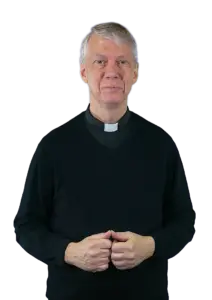
Prof. P. Anton Vogelsang

APRA Faculty

Certification and academic value

Complete the pathway and earn the corresponding credits

After completing the modules and passing the assessment activities, you will receive the official document provided by the course, with the corresponding ECTS credits awarded. The total learning workload is calculated on the basis of approximately 25 hours per ECTS credit, including classes, individual study, learning activities, and assessments.

Enrollment

Learn to read the Bible as a unified whole

Acquire a method for understanding Sacred Scripture, recognize Christ as the center of salvation history, and discover the biblical roots of the mystery of Mary. A rigorous and accessible pathway for transforming Bible reading into knowledge, discernment, and life.