Spiritual Theology
Understand, live, pray, and accompany
An organic pathway to deepen the foundations of Christian spiritual life, the growth journey of the baptized person, the pedagogy of prayer, and the value of spiritual accompaniment.
Why choose this course
From understanding to spiritual experience
Spiritual theology studies Christian life not only as a set of principles, but as a concrete experience of encounter with God, growth in grace, and progressive configuration to Christ.
The course proposes a pathway that begins with the foundations of the discipline, explores baptismal life and the process of Christian maturation, introduces the pedagogy of prayer through Saint Teresa of Ávila’s Interior Castle, and concludes with the principles of spiritual accompaniment.
A pathway for understanding spiritual life with greater rigor and learning to relate theological knowledge to prayer, discernment, vocation, and everyday life.
Who is it for?
This pathway is for you if…
You want to acquire an organic understanding of spiritual theology and understand its foundations, methods, and sources.
You are a teacher, educator, catechist, or pastoral collaborator looking for tools to support Christian growth
You want to better understand Christian prayer and the journey through the seven mansions of Saint Teresa of Ávila’s Interior Castle.
You want to understand the nature, foundations, and conditions of discernment and accompaniment in ecclesial life.
Course program
A pathway structured into five modules
The course includes five modules, each made up of five units. The program develops a total of 25 units and 75 topics, organized according to a progression that connects theological foundations, baptismal life, prayer, and spiritual accompaniment.
Foundations of Spiritual Theology
The first module defines the nature, object, method, and sources of spiritual theology. It explores Christian spiritual experience as lived faith and shows how this discipline helps to understand holiness in its personal, ecclesial, and existential dimensions.
Baptismal life and the journey of Christian growth
The second module situates spiritual life within the gift received in Baptism and explores its development within personal history. Students examine new life in Christ, the stages of the spiritual journey, and the three traditional ways—purgative, illuminative, and unitive—learning to interpret them without rigid schemes.
Christian prayer and the pedagogy of the Interior Castle
The third module introduces prayer as a living, Trinitarian, and baptismal relationship. Through Saint Teresa of Ávila’s Interior Castle, the pathway explores the first three mansions and guides students in understanding vocal prayer, meditation, recollection, perseverance, and humility.
The mansions of deepening and union with God
The fourth module presents the mansions of greater spiritual depth in the Teresian journey. From the prayer of quiet to spiritual marriage, students explore the progressive primacy of God’s initiative, the interior transformation of the person, and the relationship between contemplation, Christian maturity, and apostolic fruitfulness.
Spiritual accompaniment and ecclesial mediation
The final module translates the previous content into the perspective of spiritual accompaniment. It explores the nature and purposes of accompaniment, its baptismal and Trinitarian foundation, the maturity of the accompanier, the conditions of dialogue, and the goals of Christian discernment.
Methodology
A progressive and supported pathway
The course is delivered online and follows a calendar structured into modules. Each module takes place over five weeks and requires a total commitment of approximately 25 hours, distributed among video lessons, readings, activities, moments of exchange, and assessments.
Students can organize a significant part of their study according to their own schedule, while still respecting the deadlines indicated for activities and module completion.
Faculty and tutors support the pathway through guidance, feedback, additional learning materials, and possible live sessions. The methodology encourages progressive understanding of the content and its personal, academic, or professional integration.

Faculty
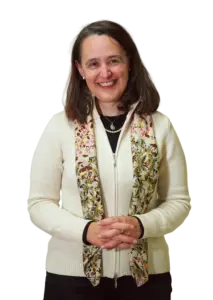
Prof.ª Angela Tagliafico
Extraordinary Professor, Faculty of Theology
Certification and academic value
Complete the pathway and earn the corresponding credits
After completing the modules and passing the assessment activities, you will receive the official document provided by the course, with the corresponding ECTS credits awarded. The total learning workload is calculated on the basis of approximately 25 hours per ECTS credit, including classes, individual study, learning activities, and assessments.
Enrollment
Begin your journey in Spiritual Theology
Deepen your understanding of the foundations of Christian spiritual life and discover how theology can illuminate prayer, discernment, vocation, and the accompaniment of the person. A progressive pathway for integrating knowledge, faith experience, and everyday life.