The Shroud of Turin: History, Science and Spirituality
An interdisciplinary investigation between faith and reason
Explore one of the most studied and debated signs of the Christian tradition through a pathway integrating theology, history, archaeology, scientific research, art, and spirituality. The course offers a rigorous analysis of the main questions concerning the origin, meaning, and cultural and religious impact of the Shroud of Turin.
Why choose this course
Understanding the Shroud of Turin in all its complexity
Studying the Shroud of Turin means engaging with an object that, over the centuries, has raised questions in history, science, theology, art, and spirituality. The course offers an interdisciplinary approach that makes it possible to examine the main historical testimonies, the archaeological context, the theological meaning, and the scientific research carried out on the cloth. Special attention is also given to the studies of the Shroud of Turin Research Project — STURP — and to the debate concerning its origin and authenticity. The pathway does not aim to offer simplified answers, but rather tools for evaluating data, interpretations, and different perspectives, developing a critical, well-documented outlook open to dialogue between faith and reason.
Who is it for?
This pathway is for you if…
You want to present the Shroud of Turin in educational, catechetical, cultural, or pastoral contexts with greater clarity and solid foundations.
You want to explore the different disciplines involved in the study of the Shroud of Turin and understand their possible connections.
You work or collaborate with museums, archives, cultural centers, media outlets, or outreach projects.
You want to approach the topic with a rigorous method, avoiding both purely devotional readings and reductionist interpretations.
Course program
A pathway structured into five modules
Each module takes place over five weeks and corresponds to an estimated learning commitment of 25 hours
Introduction to the Study of the Shroud of Turin
The first module presents the fundamental questions surrounding the study of the Shroud of Turin and introduces the main historical, scientific, academic, and spiritual perspectives. Students gain an overall understanding of the topic and learn to distinguish testimonies, interpretations, discoveries, and questions that remain open.
History of the Shroud of Turin
The module reviews the documented history and traditions associated with the Shroud of Turin, from the early centuries of Christianity to its present preservation in Turin. It also explores its influence on popular devotion, sacred art, and Christian culture
Theology and Spirituality of the Shroud of Turin
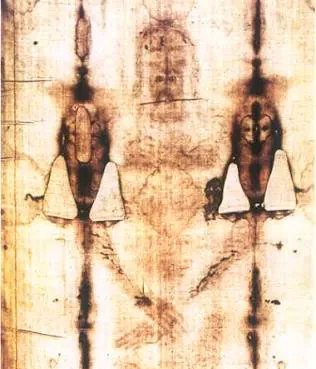
The third module explores the theological and spiritual meaning of the Shroud of Turin in relation to the Passion, death, and resurrection of Christ. The analysis of the visible traces on the cloth becomes an opportunity to explore the themes of suffering, redemption, and Christian contemplation.
Scientific Research on the Shroud of Turin
The module presents the main scientific studies carried out on the cloth, with particular attention to the 1978 STURP project. It examines photographic studies, image analyses, forensic observations, and other research used in the debate over the origin and authenticity of the Shroud of Turin.
The Shroud of Turin and Archaeological Studies
The final module places the Shroud of Turin within the historical and archaeological context of first-century Palestine. The pathway explores burial practices, the context of the Passion, related relics, and the contribution of biblical sciences to understanding the cloth.
Methodology
A progressive and supported pathway
The course is delivered online according to a calendar structured into five modules. Each module takes place over five weeks and combines independent study, digital content, readings, in-depth activities, and assessments.
You will be able to organize a significant part of your study according to your own schedule, while respecting the deadlines set for activities and completion of the different modules.
Faculty and support staff provide guidance and feedback throughout the pathway. The methodology may include live sessions, subsequently available as recordings, selected learning resources, discussions, weekly assignments, and assessment activities distributed throughout the program. Assessment therefore does not depend exclusively on a final test.
A methodology that combines autonomy and continuity, encouraging progressive understanding of the content, dialogue between disciplines, and personal integration
Faculty
Program designer and faculty member
Dr. Jorge Manuel Rodríguez Almenar
Expert faculty member
P. Andrew Dalton
Expert faculty member
Dr. Barrie Schwortz
Scientific contribution
Certification and academic value
Complete the pathway and earn the corresponding credits
After completing the modules and passing the assessment activities, you will receive the digital diploma provided by the program
Enrollment
Take part in the next edition
Explore the Shroud of Turin through an international pathway integrating history, scientific research, archaeology, theology, and spirituality